
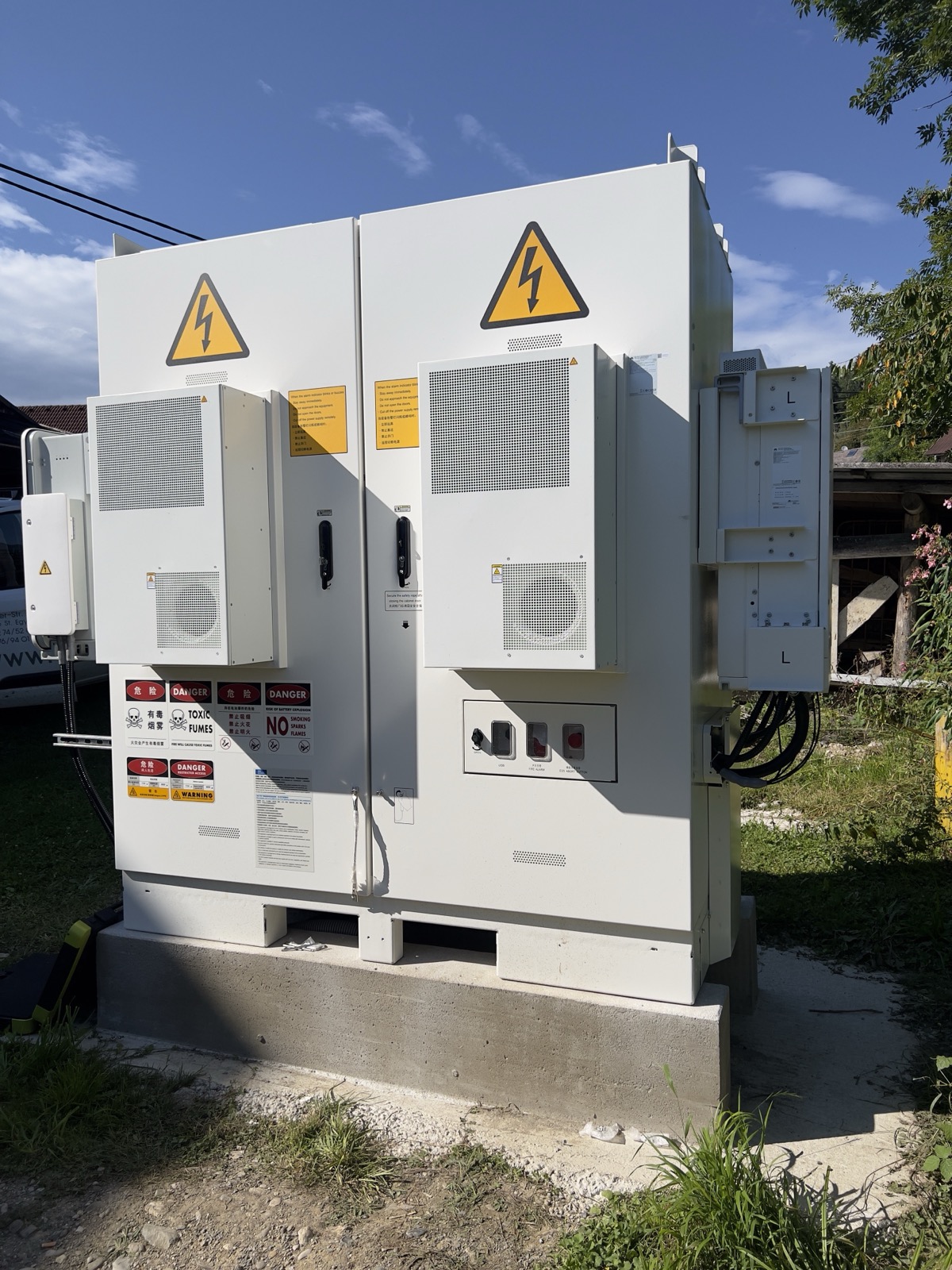
What is on site. A commercial storage system of type Huawei LUNA2000-200KWH-2H1: lithium iron phosphate cells, 193.5 kWh maximum battery capacity, 100 kW rated power, connected through an inverter on the 400-volt side.1 It sits at a 100 kW solar plant that was already in place.
Whom it works for. It is operated not by an industrial company but by a private individual who passes the electricity on commercially — to the members of an energy community. In Austria, producers and consumers can join forces in this way and share electricity from their plants.
The national coordination office describes what storage is good for in such a community: it bridges the gap between a solar plant generating at midday and members consuming in the evening. It also advises against planning storage by default, recommending it where more electricity is regularly generated than consumed at the same time.2 That is exactly the job of the storage in St. Egyden: it absorbs what the plant generates beyond simultaneous demand and releases it when the operator and the community need it.
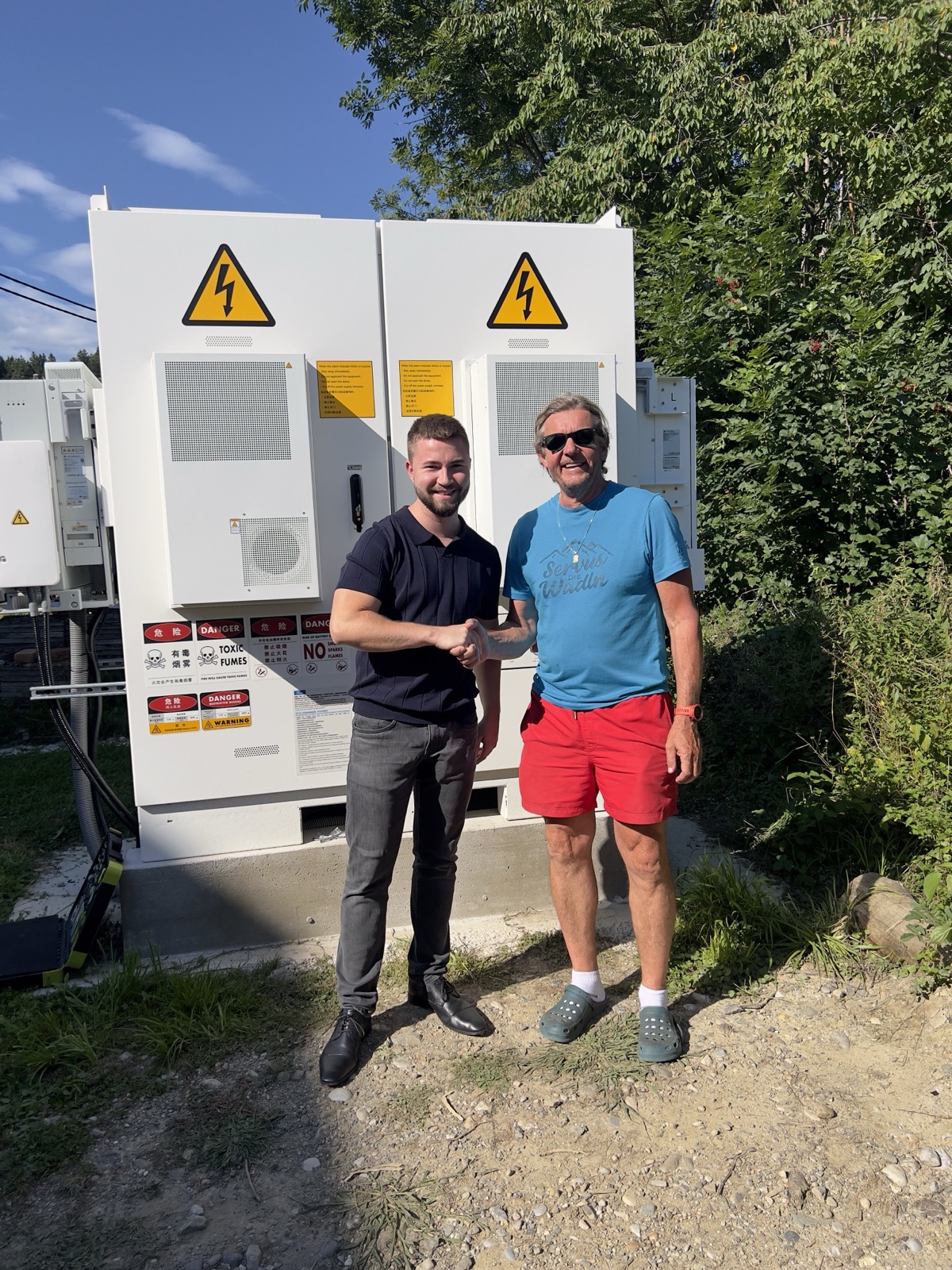
Who did what. Our part was advice and the concept, procurement, logistics and commissioning. We installed and connected it together with a local partner. That is how we work on large projects too: we structure and coordinate, execution happens with partners from our network.
What was difficult. Logistics. The storage belongs to an older, air-cooled product line in which the enclosure and the battery packs arrive separately. The packs — according to the datasheet up to 140 kg each — are only slid into the racks on site. That means two deliveries that have to line up in time, and an assembly step on site instead of a fully populated cabinet. The electrical connection to the existing plant, by contrast, fitted first time.
For planning, that means: delivery, lifting gear and fitting the packs are a work step of their own with a date of their own — not an appendix to the delivery.
The number in the model name. The storage belongs to the 200 kWh class; the datasheet gives 193.5 kWh as maximum battery capacity. The name stands for the class; calculations use the datasheet. What counts for the economics in the end is the energy that can actually be drawn within the permitted state-of-charge window — and that can be lower again. Anyone comparing offers therefore compares datasheets, not model names.
What 100 kW against 193.5 kWh means. The ratio corresponds to a C-rate of about 0.5; according to the datasheet the battery packs are rated for at most 0.5 C. At full power the storage is therefore charged or discharged in just under two hours. That suits its task: shifting power from midday into the afternoon and evening, when the community uses it.
The installation
Technical values according to the manufacturer’s datasheet.1
- Location
- St. Egyden near Velden am Wörthersee, Carinthia
- In operation since
- August 2025
- Use
- energy community and self-consumption
- Solar
- existing 100 kW plant
- Storage system
- Huawei LUNA2000-200KWH-2H1
- Cell chemistry
- Lithium iron phosphate
- Maximum battery capacity
- 193.5 kWh
- Rated power
- 100 kW
- Inverter
- LUNA2000-100KTL-M1, 400 V, transformerless
- Temperature control
- battery via an industrial-grade air conditioner; inverter and rack controller air-cooled
- Protection degree
- IP55
- Our scope
- advice and concept, procurement, logistics, commissioning; installation with a local partner
Sources
Sources last reconciled on
- Huawei Digital Power: LUNA2000-200KWH-2H1 Smart String ESS, datasheet. As of 2022-11-18. Go to source
- Österreichische Koordinationsstelle für Energiegemeinschaften (Klima- und Energiefonds): Integrating storage into energy communities. As of 2026-09. Go to source