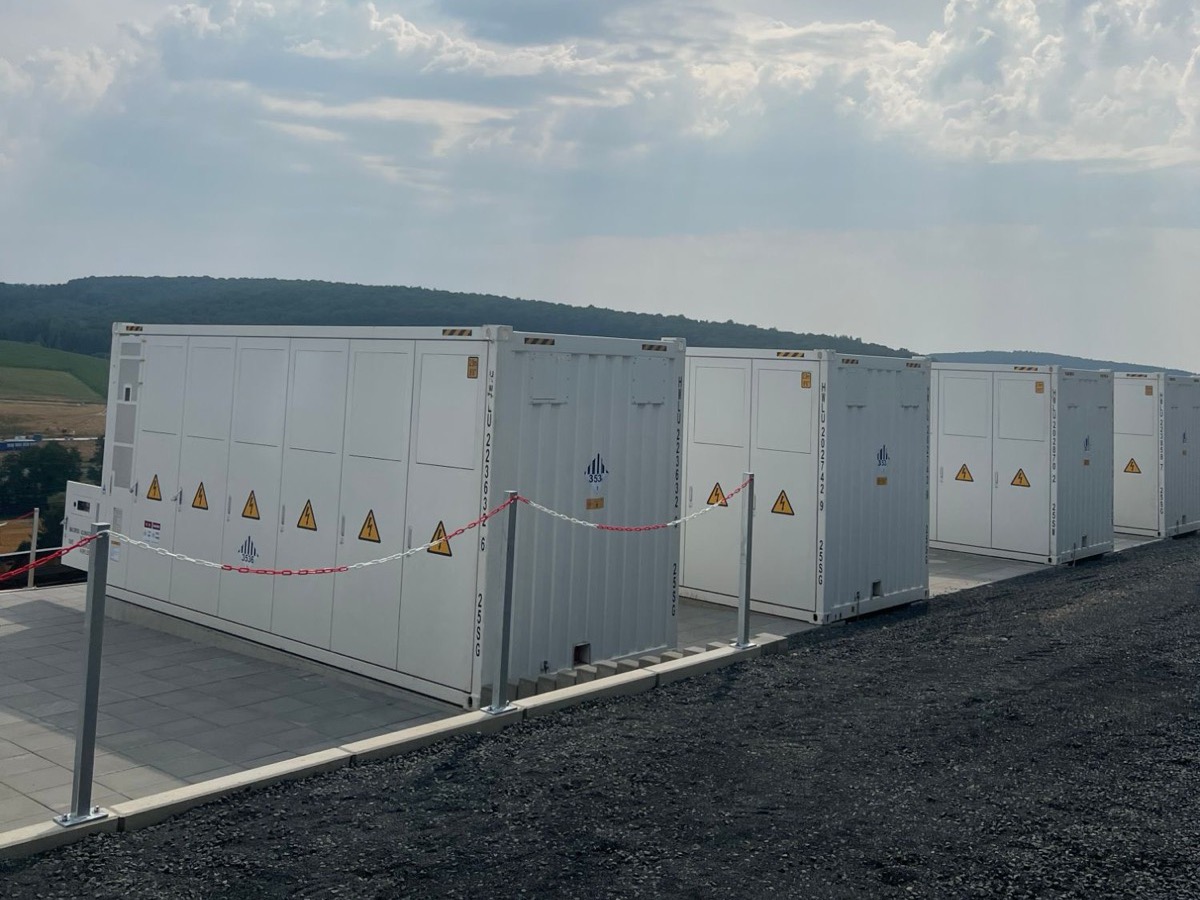
The four fields
| Field | Task of the storage | Source of revenue or benefit | Voltage level |
|---|---|---|---|
| Utility | shift electricity in time, support the grid | Arbitrage, balancing services, avoided Redispatch | medium to high voltage |
| Industry | shave peaks, raise self-consumption | lower grid fees, less grid offtake | behind the meter |
| Data centres | lower connection capacity, buffer peaks | less grid reinforcement, shaved peaks, grid services | medium to high voltage |
| Engineering | prove that it all fits together | prerequisite for each of the other three | 1 to 60 kV |
What is the same in all four cases
It always starts with the same question: what can actually be connected at this point of the grid? Everything else — design, economics, permitting — follows from it.
And it always ends with the same proof: a plant certificate under VDE-AR-N 4110 and commissioning by the grid operator. Between those two points lies our work.
Also: decommissioning & repowering
When a solar plant reaches the end of its life, we take it down, recycle every component as the rules require and hand the land back to you — or keep using the grid connection, for new modules, storage or both. More under Decommissioning & repowering.