The problem, precisely stated
Renewable build-out works. In 2025 Germany added 16.4 GW of solar and 4.6 GW of onshore wind; installed renewable capacity rose to almost 210 GW.3
What is not keeping pace is the system's ability to absorb that electricity and shift it in time. In 2025, 2,704 GWh of solar generation was curtailed — some 94 percent more than the year before — while congestion management cost EUR 3.071 billion in total.2
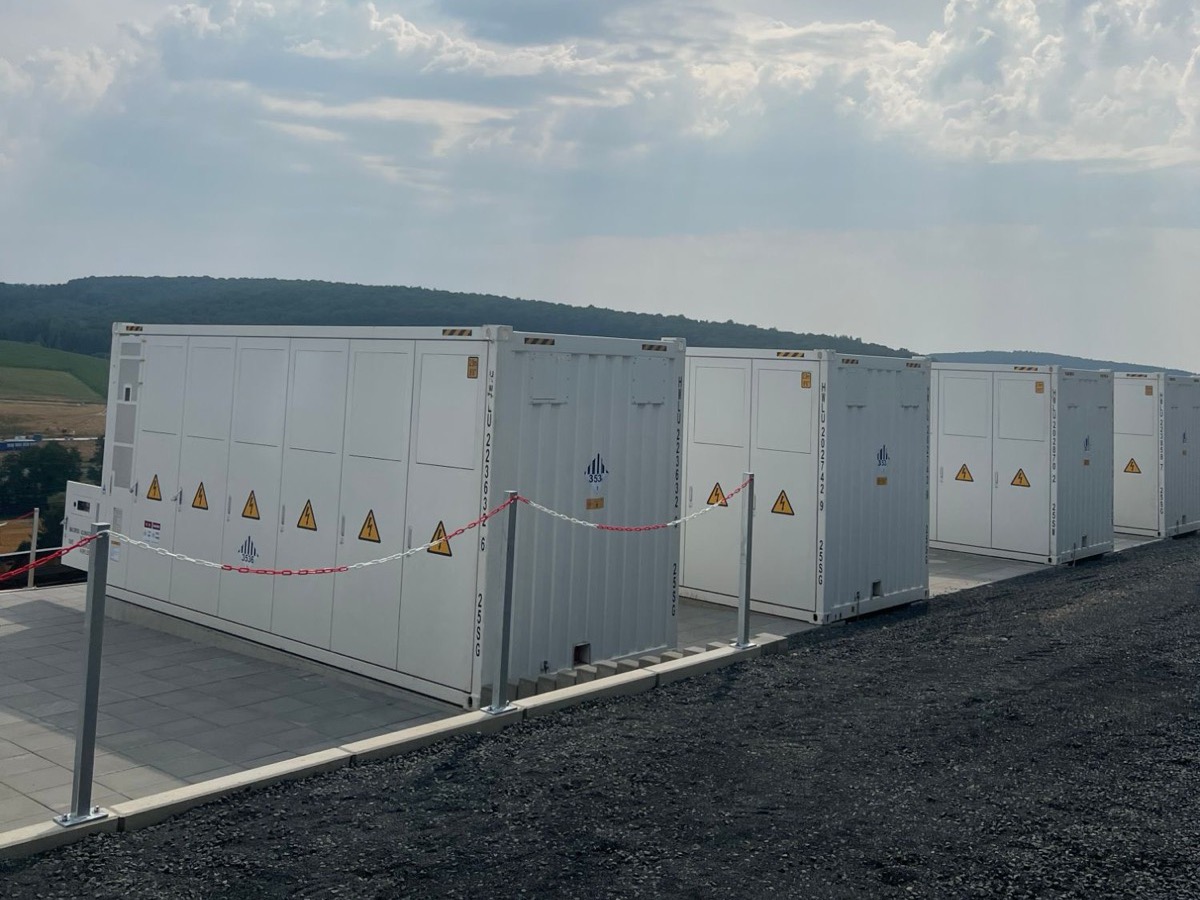
That is not a law of nature. It is a gap between generation and grid, and storage is the component that fits precisely into it.
What we actually do
We look for sites where storage serves the grid and pays — more often the same place than it appears. Then we move them through the procedure: securing land, connection request, permitting, design, certification route, financial model.
The result is a project that survives institutional scrutiny. That is the actual contribution: not the idea, but the evidenced state.
- Site assessment — grid proximity, connection capacity, planning baseline, estimate of the construction cost contribution
- Securing land — lease or option with cable rights, access and registration in the land register
- Grid connection — request, coordination with the distribution operator, assessment of flexible agreements under section 17(2b) EnWG
- Permitting — preliminary enquiry or building application with noise, fire safety and species protection reports
- Engineering — design, single-line diagram, certification route under VDE-AR-N 4110
- Financial model — revenue modelling on sourced assumptions, sensitivities, grid fee scenarios
- Handover — share deal or asset deal via a project company
A storage project is an asset only once land, grid connection, permits and economics are evidenced together.
Until then it is an idea. The difference is not a matter of wording but the difference between a sale price and none.
Value for the three sides
Three interests attach to a storage project. They are not identical, but nor are they mutually exclusive.
For landowners
- Assessment of the site for connection capability and economics, at no cost to you
- An honest answer even where a site does not work
- A long-term lease with decommissioning security and settled cable rights
- One point of contact throughout the development period
For investors
- Projects with evidenced procedural status rather than statements of intent
- A data room from day one, not a retrospective reconstruction
- Transaction models with their drawbacks stated openly
- Financial models whose assumptions each carry a source
For grid operators
- Requests with demonstrable maturity rather than placeholders in the queue
- Willingness to enter flexible connection agreements where they serve the grid
- Design under VDE-AR-N 4110 with the certifier involved early
- Storage at sites that relieve congestion rather than deepen it
Sources
Sources last reconciled on
- Fraunhofer ISE (Energy-Charts): Public net electricity generation in Germany in 2025. As of 2026-01-02. Go to source
- Bundesnetzagentur | SMARD.de: Grid congestion management in 2025: volume stable, costs up. As of 2026-03-30. Go to source
- Bundesnetzagentur: Press release: renewable energy expansion 2025. As of 2026-01-08. Go to source
- Bundesnetzagentur (Monitoring), berichtet von pv magazine: Grid connection requests and offers for battery storage in 2025. As of 2026-08-25. Go to source